Read the Key Considerations Cards
Critical signals often missed, now revealed for every home you save
8 min read
The listing doesn't reveal the full picture of the home you like, but often those are key considerations you need to know to make an informed decision. To name a few: a flood zone that may require additional insurance, the liquefaction and earthquake risk that may cause significant damage to the property, the high-voltage corridor behind the fence, or a nearby landfill or Superfund site.
That is what Key Considerations are for. Save a home to OpenHomeVue, and it checks the address against twenty research factors: environmental hazards, what is nearby, the street and the lot, the listing's own history, and neighborhood safety. Each factor is shown as an easy-to-understand info card, with visual cues where it deserves your attention.
This article walks through finding the section, reading a card, what the twenty considerations cover, and digging into any card that raises your eyebrow.
Start at the tally
Open a saved home and find Key Considerations in the property details. Before you read a single card, the section header gives you the headline: Attention Signals, a count of High and Medium signals for this home.
You will also meet the cards at save time. On the Web App, saving a home opens a short reveal, "Here's what stands out," with the findings worth a look. On the Mobile App, the same cards appear right in the save preview, before you commit the home to your Watch List.

The tally first: a count of High and Medium attention signals before you read a single card.
Read a card
Every card has the same anatomy: the finding on top, the factor underneath, and a color that tells you how to weigh it.
- Red (High): the strongest signal, like a home inside a flood or fault zone. Worth careful consideration of whether to move along.
- Amber (Medium): worth a closer look, like a landfill within a few miles or an elevated crime index.
- Yellow (a lighter Medium): one step milder, like a home front partially facing incoming traffic from a residential road.
- Green (Low): checked, and nothing found.
- Grey: informational, like the front-facing direction or zoning; facts to know, not risks to weigh.
The findings are specific, not vague: "In zone" or "Not in zone," a distance in feet, a decibel range, an index against the national average. Real values you can act on.
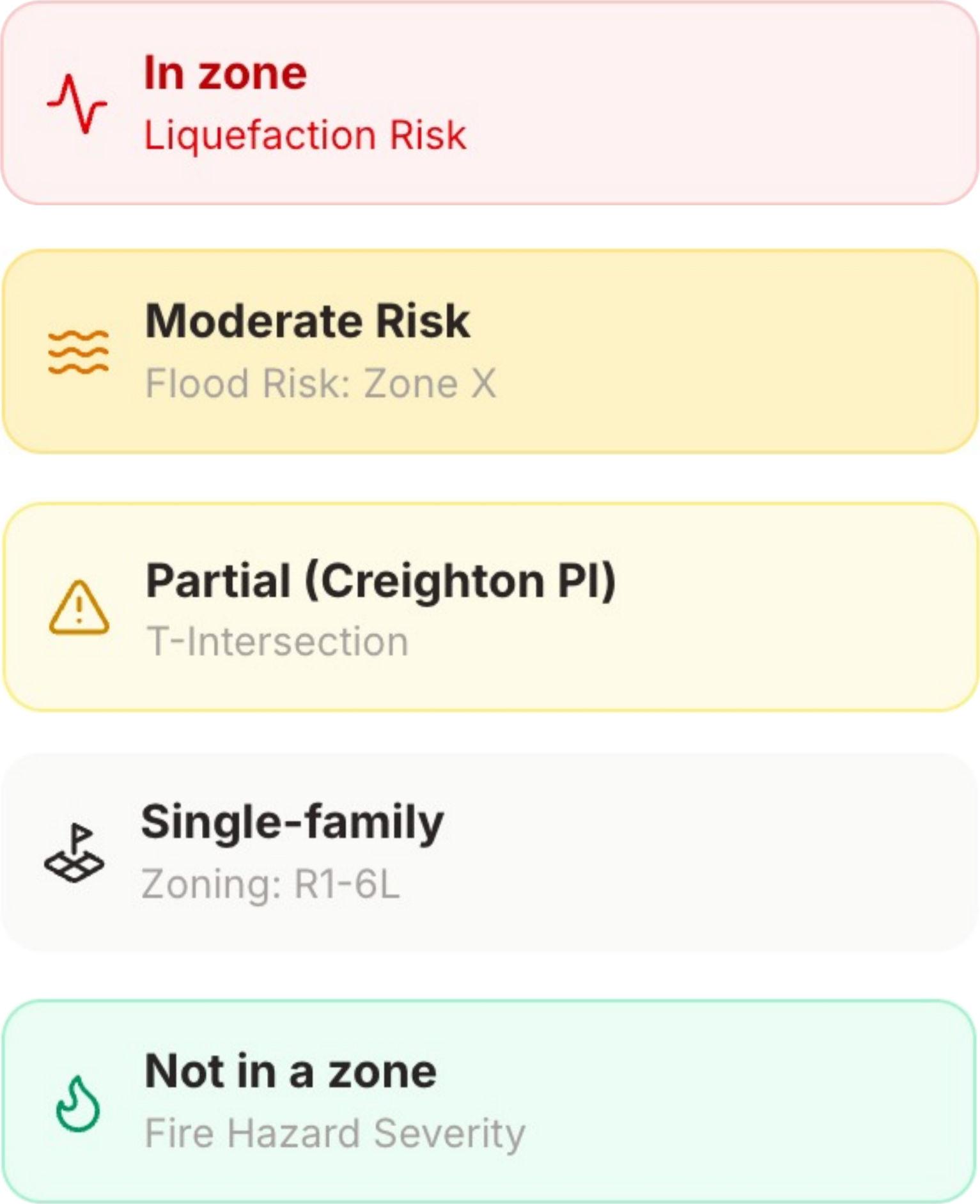
Each signal level and the color that carries it, from a red High down to a grey informational card.
What the twenty cards cover
Five kinds of questions, answered per home.
- Environmental hazards: Flood Risk, Fire Hazard Severity, Earthquake Fault, Liquefaction Risk, Landslide Risk. The zone maps that decide insurance premiums and disclosure forms.
- What is nearby: Powerline Proximity, Gas Pipeline Proximity, Superfund Proximity, Landfill Proximity, Cemetery Proximity. Measured distances, not guesses.
- The street and the lot: Front Facing, T-Intersection, Street Traffic, Traffic Noise, Corner Lot. The daily-life factors you only notice after moving in.
- The listing's history: Flip Risk and Relisting. How many times this home has been listed, and whether it is likely being flipped.
- The neighborhood and the rules: Crime Index (scored against the national average of 100, lower is safer), Zoning, and, for California homes, a link to the state's sex-offender registry.
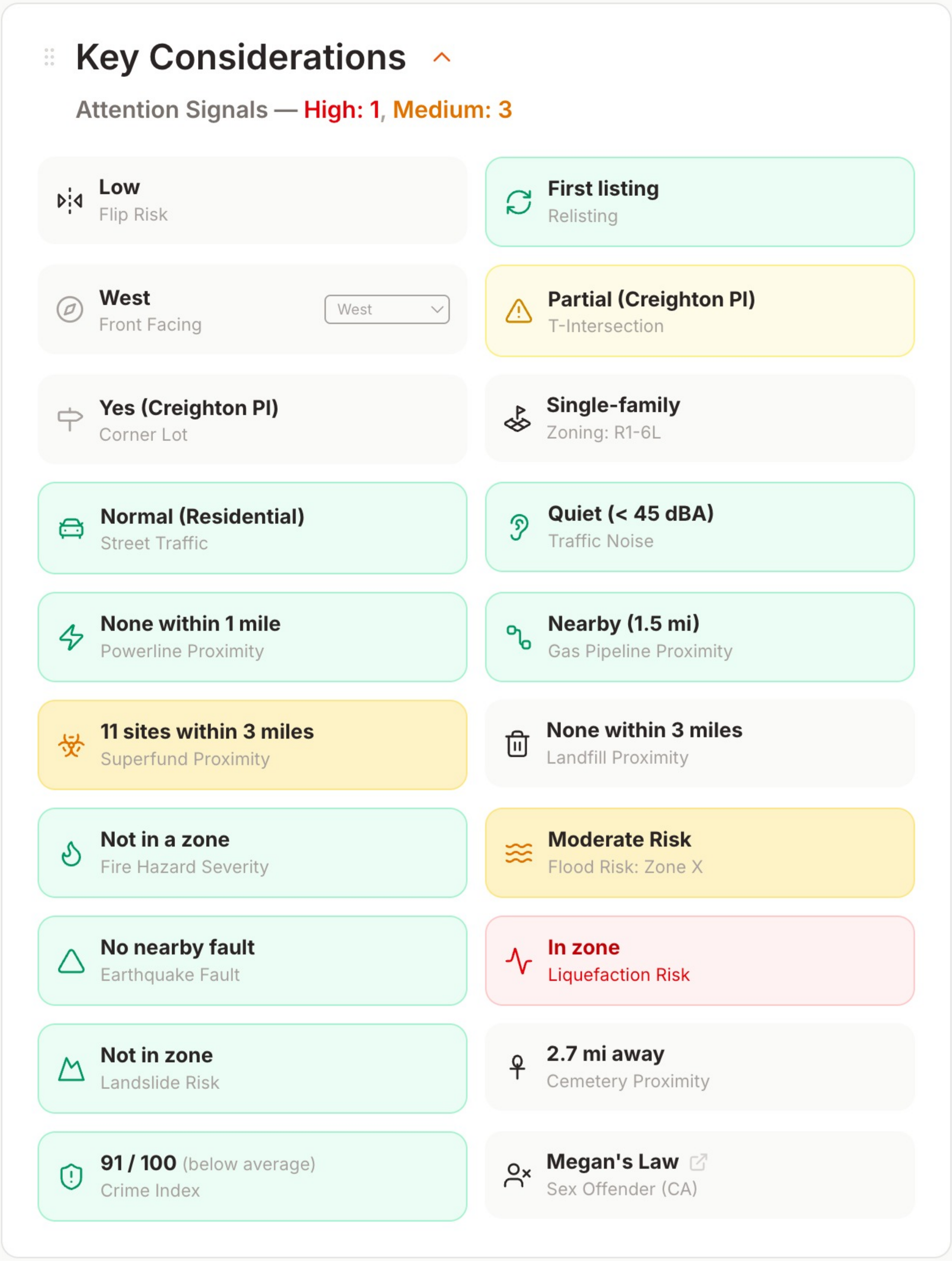
Every saved home gets the full section: the Attention Signals tally on top, then a card for each of the twenty factors.
Look deeper
A card is the summary; the evidence is one tap away.
- Tap a card and the map opens focused on that factor: the flood zones drawn around your pin, the fault trace, the powerline corridor. You see where the finding comes from, not just that it exists.
- Cards with a Learn more link open the matching article in our Key Considerations library, plain-language explanations of what each zone means and what to ask about it.
- Pin a note to a card to keep your homework where it belongs: the seller's answer about the flood insurance lives on the Flood Risk card, context preserved.
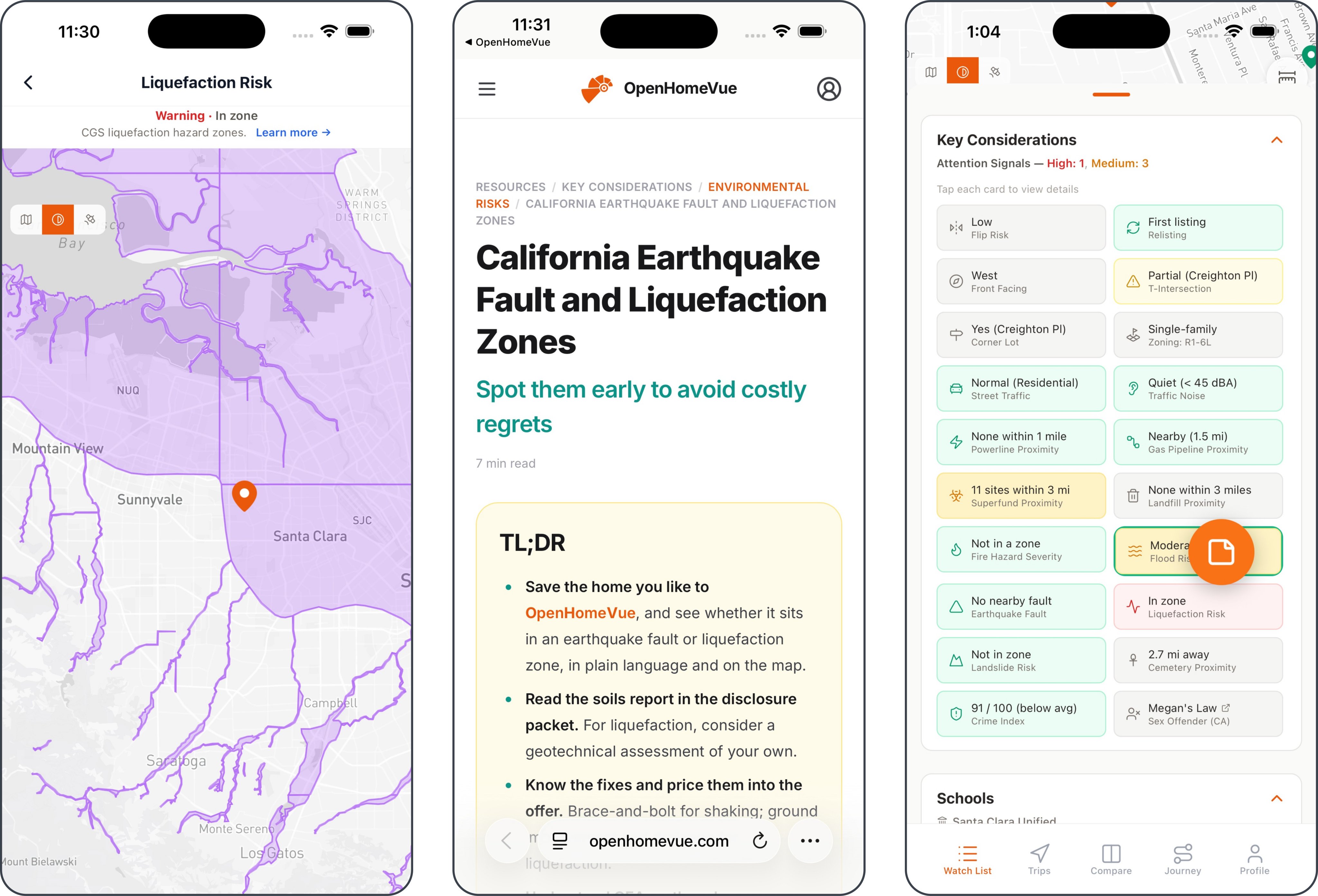
Tap a card, and the map shows you where the finding comes from.
Set your preferences to make it yours
Twenty factors is the full checklist; your search may not need all of it. In Settings, toggle off the cards you do not care about, and the section, and its tally, recalculates around the ones you kept. Your choices sync between the Web App and the Mobile App.
Related how-tos
Appendix: every card, in detail
For readers who want more details: every card's attention-signal definitions and, where it has one, its knowledge-article link.
A quick color key before the list. Both apps use the same four colors: green for Low, amber for Medium, red for High, and grey for the informational cards that aren't scored. Occasionally a paler yellow, for a flag one step milder than a full amber Medium.
Environmental hazards
Flood Risk
Attention Signals:
- High: inside FEMA's Special Flood Hazard Area (the 1%-annual-chance, "100-year," flood zone).
- Medium: inside the 0.2%-annual-chance ("500-year") band.
- Low: above the 0.2% level.
- Neutral: FEMA has not mapped a flood zone here.
Learn more: Flood Risk
Fire Hazard Severity
Attention Signals:
- High: Very High or High severity (California) or the top hazard band elsewhere.
- Medium: Moderate severity, within about 500 feet of a higher-severity zone, or the next band down outside California.
- Low: evaluated and clear.
Learn more: Fire Hazard Severity. OpenHomeVue's own explainer; the in-card tooltip link goes straight to Cal Fire or the US Forest Service instead.
Earthquake Fault
Attention Signals:
- High: inside an Alquist-Priolo Earthquake Fault Zone.
- Medium: outside any zone, but a specific nearby fault is on record.
- Low: outside any zone with no notable nearby fault.
- Neutral: not evaluated.
Learn more: Earthquake Fault & Liquefaction Zones
Liquefaction Risk
Attention Signals:
- High: inside a California Geological Survey liquefaction zone.
- Low: evaluated and clear.
- Neutral: the area has not been evaluated.
Learn more: Earthquake Fault & Liquefaction Zones
Landslide Risk
Attention Signals:
- High: inside a CGS earthquake-induced landslide zone.
- Medium: outside the zone but within about 200 feet of one.
- Low: evaluated and clear of both.
- Neutral: not evaluated.
Learn more: Landslide Risk
What is nearby
Powerline Proximity
Attention Signals:
- High: within about 1,000 feet of a high-voltage line.
- Medium: a line is present anywhere within a mile.
- Low: nothing within a mile.
Learn more: Powerline Proximity
Gas Pipeline Proximity
Attention Signals:
- High: within about 650 feet (200 m) of a transmission pipeline.
- Medium: roughly 650 feet to a third of a mile (200–500 m).
- Low: beyond that, within a 3-mile search radius.
Learn more: Gas Pipeline Proximity
Superfund Proximity
Attention Signals:
- High: any EPA Superfund site within 3 miles is still active (not fully remediated).
- Medium: every nearby site has completed remediation.
- Low: no site within 3 miles.
Learn more: Superfund Proximity
Landfill Proximity
Attention Signals:
- High: an active landfill nearby, or an inactive one within about a mile.
- Medium: only a farther inactive site (within 3 miles).
- Neutral: nothing within 3 miles.
Learn more: Landfill Proximity
Cemetery Proximity
Attention Signals: Always neutral, informational, never a flag.
The street and the lot
Front Facing
Attention Signals: Always neutral. It's a fact, not a risk factor.
T-Intersection
Attention Signals:
- High: the home fully faces a road that is busy (the oncoming-traffic and headlight risk is highest here).
- Medium: fully faces a road that isn't especially busy, or only partially faces a road (the same risk, milder but still real).
- Low: analyzed and clear, no road faced.
- Neutral: not yet analyzed.
Street Traffic
Attention Signals:
- High: a major road or highway (a
secondary,primary,trunk, ormotorwaysegment). - Medium: a
tertiary"less busy" through-road. - Low: a residential street.
- Neutral: not yet analyzed.
Traffic Noise
Attention Signals:
- High: above 50 dBA.
- Medium: 45 to 50 dBA.
- Low: below 45 dBA (confirmed quiet).
Corner Lot
Attention Signals: Always neutral. It's a fact, not a risk factor.
The listing's history
Flip Risk
Attention Signals:
- High: resold within less than a year at more than 25% above the prior sale price.
- Medium: resold within less than two years at more than 25%.
- Neutral: no notable flip pattern, or no prior sale on record.
Relisting
Attention Signals:
- Low: first listing, never relisted.
- Medium: relisted once.
- High: relisted two or more times.
The neighborhood and the rules
Crime Index
Attention Signals:
- High: index of 200 or above (double the national average).
- Medium: 100 to 199 (at or above average).
- Low: below 100 (below average).
Zoning
Attention Signals: Always neutral, informational only.
Sex Offender (CA)
Attention Signals: Always neutral, informational, and Megan's Law is only applicable in California.
Updated Jul, 2026